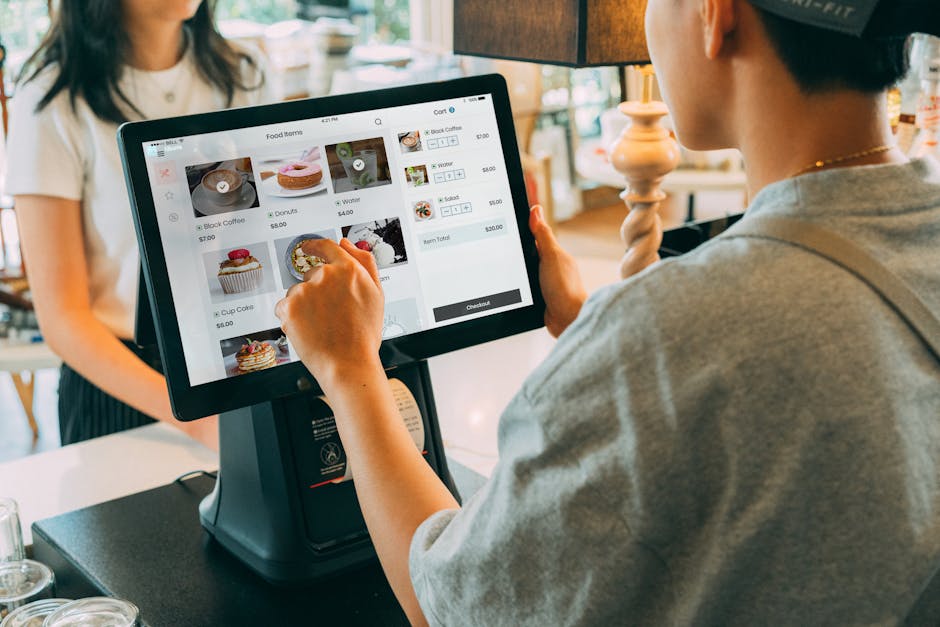
The borrower experience in a digital mortgage point-of-sale system is the sum of every interaction that the borrower has with the lender technology platform from the moment they click the application link to the moment they receive the clear-to-close notification, and it is increasingly the factor that determines whether a borrower completes the application or abandons it partway through. In the competitive mortgage market of 2026, where borrowers can choose from multiple lenders and where the application experience is often the first substantive interaction a borrower has with a lender, the quality of the POS experience has become a critical differentiator that affects lender conversion rates, borrower satisfaction scores, and the likelihood of repeat business and referrals. The borrower experience encompasses the application interface design, the document collection process, the communication features, the transparency of the loan status and pricing information, and the emotional tone of the interaction, which should feel guided, supportive, and respectful of the borrower time and effort rather than bureaucratic and impersonal.
The application interface is the first component of the borrower experience, and its design has a disproportionate impact on the borrower perception of the lender and on the likelihood that the borrower will complete the application. The best POS application interfaces in 2026 employ a conversational design that presents the Form 1003 questions one at a time or in small logical groups, with plain-language explanations that replace mortgage jargon with everyday language, visual progress indicators that show the borrower how far they have progressed and how much remains, and smart branching logic that skips irrelevant questions based on the borrower previous answers. The conversational approach transforms the Form 1003, which is a dense and intimidating multi-page form, into a series of simple questions that feel manageable and approachable, reducing the cognitive load on the borrower and the anxiety that often accompanies the mortgage application process. The interface should also be mobile-optimized, as a significant and growing percentage of borrowers begin or complete their applications on a smartphone or tablet, and a mobile interface that is cramped, slow, or difficult to navigate on a small screen will frustrate borrowers and increase the abandonment rate.
The application completion time is a key metric that lenders track to evaluate the effectiveness of their POS application interface, and the leading platforms have driven the average completion time down from the 45 to 60 minutes that was typical of early digital applications to the 20 to 30 minutes that the best platforms achieve through streamlined question design, automated data retrieval, and intelligent skip logic. The reduction in completion time is significant not only for borrower convenience but also for conversion, as research has consistently shown that application abandonment rates increase sharply when the completion time exceeds 30 minutes, with many borrowers abandoning the application at the point where they encounter a question they cannot answer or a document they cannot immediately locate. The leading platforms address the abandonment risk by allowing the borrower to save their progress and return later, by providing contextual help and explanations for each question, and by minimizing the upfront information requirements through automated data retrieval that populates income, asset, and employment information from third-party sources rather than requiring the borrower to enter it manually.
The document collection process is often the most challenging and time-consuming aspect of the borrower experience in a digital POS platform, as the borrower must locate, compile, and upload a variety of financial documents including pay stubs, W-2 forms, tax returns, bank statements, and identification documents. The document collection challenge is compounded by the fact that many borrowers do not have all of their financial documents readily accessible in digital format, particularly tax returns and older bank statements that may exist only in paper form or that are stored in filing systems that the borrower must search through. The best POS platforms address the document collection challenge through multiple strategies, including providing a clear and itemized list of required documents at the beginning of the application so that the borrower can gather them in advance, offering multiple upload methods including desktop upload, mobile camera capture, and drag-and-drop, and integrating with document retrieval services that can automatically retrieve tax return transcripts from the IRS and bank statements from financial institutions through secure data feeds.
The mobile camera capture capability is a particularly important feature for the document collection process, as it allows the borrower to photograph a paper document with their smartphone camera and upload the image directly to the POS platform, eliminating the need for a scanner or the cumbersome process of photographing a document, transferring the image to a computer, and then uploading it to the platform. The mobile capture feature should include automatic image enhancement that adjusts the brightness, contrast, and orientation of the captured image to ensure that it is readable, and should provide immediate feedback to the borrower if the image quality is insufficient, prompting the borrower to retake the photo rather than submitting an illegible document that will be rejected by the loan officer or the underwriter. The leading platforms incorporate image quality assessment algorithms that evaluate the captured image for clarity, completeness, and legibility, and that guide the borrower to capture a higher-quality image if the initial capture does not meet the quality threshold, reducing the back-and-forth between the borrower and the loan officer that delayed the document review process in earlier generations of POS platforms.
The communication features of a mortgage POS platform play a critical role in the borrower experience, as the mortgage application process is inherently anxiety-inducing for many borrowers, who are making the largest financial commitment of their lives and who are navigating an unfamiliar and complex process with significant financial and emotional stakes. The best POS platforms provide multiple communication channels including in-app messaging, email notifications, SMS text alerts, and push notifications, and they use these channels strategically to keep the borrower informed at every stage of the process without overwhelming them with unnecessary communications. The communication strategy should be proactive rather than reactive, with the platform automatically notifying the borrower when their application has been received, when documents have been reviewed, when the loan has been submitted to underwriting, when conditions have been issued, when the conditions have been cleared, and when the loan has been approved and the clear-to-close has been issued. The proactive communication keeps the borrower informed and reassured, reducing the anxiety that drives borrowers to call their loan officer repeatedly for status updates and freeing the loan officer to focus on productive work rather than status inquiries.
The in-app messaging feature provides a secure and context-aware communication channel between the borrower and the loan officer, with messages tied to specific loan files and application stages so that both parties have the full context of the conversation. The in-app messaging is preferable to email for loan-related communication because it keeps all loan-related correspondence in a single, searchable location that is accessible to both the borrower and the loan officer, rather than scattered across email inboxes where messages can be lost, overlooked, or buried under other correspondence. The messaging feature should support the attachment of documents, allowing the borrower to submit a requested document through the messaging channel rather than navigating to a separate document upload page, and should provide read receipts that confirm when a message has been viewed, reducing the uncertainty about whether a message has been received and read. The messaging history also serves as a compliance record, documenting the communications between the borrower and the lender throughout the origination process in a manner that is auditable and retrievable for regulatory examination purposes.
The transparency of the loan status and pricing information is a factor that significantly affects the borrower experience, as borrowers want to know where their loan stands in the process, what the next steps are, and what the final terms and costs will be. The best POS platforms provide a loan status dashboard that displays the current stage of the loan in the origination pipeline, the tasks that have been completed, the tasks that are in progress, the tasks that are pending, and the expected timeline for the remaining steps through closing. The status dashboard should be updated in real time as the loan progresses through the pipeline, so that the borrower always has access to the most current status without needing to contact the loan officer for an update. The pricing transparency features should provide the borrower with a clear and detailed breakdown of the interest rate, the monthly payment, the closing costs, and the total cost of the loan over its term, presented in a format that is easy to understand and that allows the borrower to compare different loan options and to understand the trade-offs between rate, points, and closing costs.
The emotional dimension of the borrower experience is a factor that is often overlooked in the evaluation of POS platforms, which tend to focus on functional features and efficiency metrics, but that is critically important to the borrower overall satisfaction with the lender and the likelihood that the borrower will recommend the lender to friends and family. The mortgage application process is, for most borrowers, a stressful and consequential undertaking that involves significant financial commitment, extensive personal and financial disclosure, and a complex process that the borrower does not fully understand. A POS platform that is cold, impersonal, and bureaucratic in its tone and design amplifies the borrower stress and creates a negative emotional association with the lender, while a platform that is warm, supportive, and human in its tone can reduce the borrower stress and create a positive emotional association that enhances the borrower loyalty and willingness to refer. The emotional design elements include the language used in the application questions and help text, the visual design and color palette, the tone of the automated communications, and the availability of human assistance when the borrower needs it, all of which contribute to the borrower perception of the lender as a trusted partner or as a faceless institution.
The availability of human assistance within the digital POS experience is a critical feature that addresses the reality that not all borrowers can or want to complete the application entirely on their own, and that even the most well-designed digital platform cannot anticipate and address every borrower question and concern. The best POS platforms provide a seamless transition between the self-service digital application and human assistance, with features such as click-to-call buttons that connect the borrower directly to their loan officer, co-browsing capabilities that allow the loan officer to view the borrower screen and guide them through the application in real time, and scheduling tools that allow the borrower to book an appointment with their loan officer for a more in-depth consultation. The human assistance features should be integrated into the POS platform rather than requiring the borrower to exit the platform and switch to a phone call or a separate video conferencing tool, as the integrated approach maintains the context of the application and allows the loan officer to see exactly where the borrower is in the process and what assistance they need.
The accessibility and inclusivity of the POS platform are considerations that affect the borrower experience for specific segments of the borrower population, including borrowers with disabilities, borrowers with limited English proficiency, and borrowers who are less comfortable with technology. The POS platform should comply with the Web Content Accessibility Guidelines, which provide standards for making web content accessible to users with visual, auditory, motor, and cognitive disabilities, including support for screen readers, keyboard navigation, sufficient color contrast, and resizable text. For borrowers with limited English proficiency, the platform should offer multilingual support, with the application interface, help text, and communications available in the languages spoken by the lender target borrower population, which in the United States typically means Spanish at a minimum and potentially other languages depending on the lender market area. For borrowers who are less comfortable with technology, the platform should provide a guided experience with clear instructions, minimal jargon, and the availability of human assistance at every stage, recognizing that the digital application should be an enabler for all borrowers rather than a barrier for those who are less tech-savvy.
The post-application experience, which encompasses the period from the application completion through the underwriting and closing process, is an extension of the POS borrower experience that is often managed by the LOS rather than the POS platform, but that is perceived by the borrower as a single continuous experience with the lender. The leading POS platforms are extending their functionality deeper into the origination lifecycle, providing borrower-facing status tracking, condition management, and communication features that span the gap between the POS and the LOS, and that maintain the borrower-facing experience quality throughout the process. The post-application experience should maintain the transparency, communication, and human support that characterized the application phase, with the borrower receiving regular updates on the loan status, clear instructions on any conditions or additional documentation needed, and timely responses to any questions or concerns. The consistency of the experience across the POS and the LOS phases is important, as a borrower who has a positive experience during the application phase but then encounters a black hole of silence and uncertainty during the underwriting phase will perceive the overall experience as negative, regardless of how well the application phase was executed.
The role of trust and transparency in the borrower experience cannot be overstated, as the mortgage application requires the borrower to share highly sensitive personal and financial information with the lender through a digital interface, and the borrower willingness to do so depends on their trust that the lender will handle their data with care and that the platform is secure and reputable. The trust signals that a POS platform should project include visible security indicators such as SSL certificate badges and privacy policy links, clear explanations of how the borrower data will be used and protected, transparent disclosure of the lender licensing and regulatory status, and the absence of hidden fees or surprise requirements that erode the borrower confidence in the lender integrity. The transparency extends to the application process itself, with the borrower provided a clear roadmap of the steps ahead, the expected timeline, and the documentation that will be required, so that the borrower is never surprised by a request or a delay that they did not anticipate. The trust and transparency elements are particularly important for first-time homebuyers, who may be unfamiliar with the mortgage process and who rely on the platform and the loan officer to guide them through what is often the largest financial transaction they have ever undertaken.
The post-closing experience and the borrower relationship beyond the loan origination is an area where the POS platform can play an extended role, maintaining the borrower engagement with the lender and positioning the lender for future refinance, home equity, or purchase transactions. The leading POS platforms are extending their functionality beyond the closing to provide post-closing features such as payment portal access, escrow analysis and tax payment tracking, amortization schedule visualization, and refinance opportunity alerts that notify the borrower when market conditions create a favorable refinance scenario. The post-closing engagement keeps the lender top-of-mind for the borrower and creates a data-rich relationship that the lender can leverage for targeted marketing and retention initiatives. The post-closing experience also includes the solicitation of borrower feedback and reviews, with the POS platform sending a post-closing survey to capture the borrower satisfaction with the process and to identify areas for improvement, and providing the borrower with an easy path to leave a public review that can support the lender reputation and customer acquisition efforts.
In conclusion, the borrower experience in a digital mortgage point-of-sale system is a multifaceted and consequential aspect of the mortgage lending process that affects the borrower satisfaction, the lender conversion rate, and the long-term relationship between the borrower and the lender. The best borrower experiences are those that combine a well-designed application interface, an efficient and supportive document collection process, proactive and transparent communication, clear pricing and status information, and the availability of human assistance when needed, all delivered through a platform that is accessible, inclusive, and respectful of the borrower time and emotional investment. For lenders, investing in the borrower experience is not merely a matter of competitive differentiation but a strategic imperative that drives conversion, efficiency, and borrower loyalty, and the POS platform is the primary vehicle through which that investment is delivered. For borrowers, understanding what to expect from a digital POS experience and seeking out lenders that offer a high-quality experience can make the difference between a smooth and confident mortgage application and a stressful and frustrating one. This feature story is for educational purposes only and does not constitute an endorsement of any specific platform or lender.

Have Questions About Your Mortgage Options?
Speak with Ebonie Beaco, Senior Mortgage Loan Officer (NMLS #2389954).
Mortgage Financing & Mortgage Education
Explore Mortgage Financing Options
Visit MortgageStrategist.net for professional services and resources.
This is a promotional link to an affiliated business of the publisher, separate from the magazine's editorial content.
Editorial Disclosure: This article is published by Mortgage & Real Estate Strategist Magazine for informational and educational purposes. It does not constitute legal, tax, financial, or investment advice. Mortgage and real estate professionals should consult appropriate experts and verify current program guidelines before making decisions based on this content.
Sources & References
- MBA Technology Survey
- Fannie Mae Technology Guide
- CFPB Digital Mortgage Guidelines
- NMLS Consumer Access
Sources Last Verified: November 8, 2026
Publisher & Mortgage Strategist
Ebonie Beaco is the founder and publisher of Mortgage & Real Estate Strategist Magazine. She is a licensed mortgage loan officer (NMLS #2389954) affiliated with NEXA Lending (NMLS #1660690), providing lending services in multiple states. She covers mortgage strategy, lending programs, and real estate investing.
Read More Articles by Ebonie Beaco