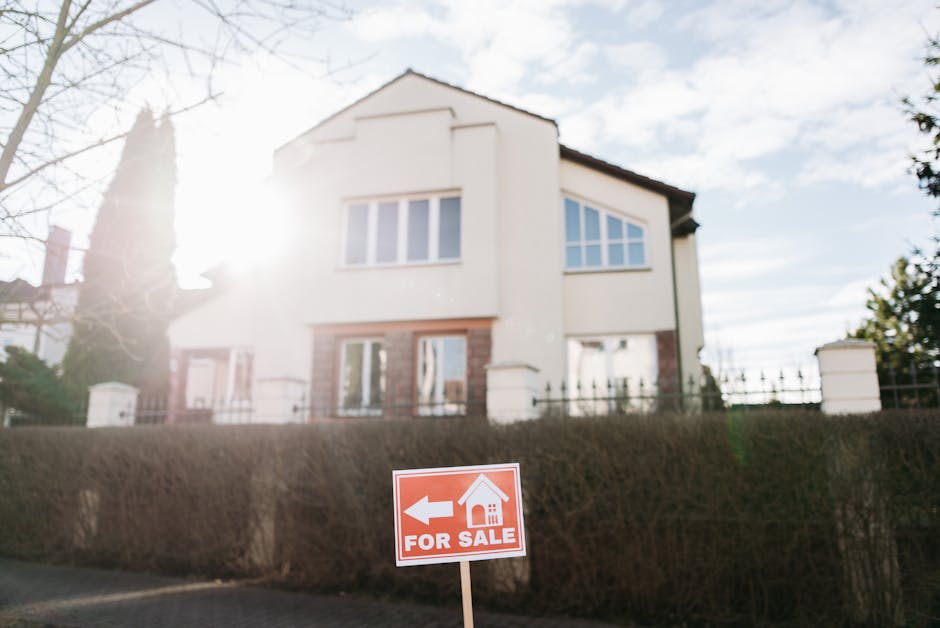
The median monthly cost of homeownership in the United States has crossed a sobering threshold, now consuming more than 40 percent of the median household income, according to the latest affordability analysis compiled from multiple housing market data sources. The figure, which encompasses principal and interest payments on a 30-year fixed-rate mortgage for a median-priced home, plus property taxes, homeowners insurance, and mortgage insurance where applicable, represents the highest affordability burden recorded in data spanning more than three decades. For millions of prospective homebuyers, the calculation has transformed the American dream of homeownership from an achievable aspiration into an increasingly remote possibility, forcing prolonged stays in rental housing, multigenerational living arrangements, and in many cases, the indefinite postponement of purchase plans.
The deterioration in affordability has been driven by a convergence of factors that have reinforced one another over the past several years. Home prices, which surged dramatically during the pandemic-era housing boom, have not retreated meaningfully despite the sharp increase in mortgage rates that began in 2022 and has persisted through 2026. The 30-year fixed-rate mortgage, which averaged below 4 percent as recently as early 2022, has spent much of 2026 hovering between 6.8 and 7.3 percent, more than doubling the borrowing cost for new purchasers. Property taxes have risen in many jurisdictions as local governments reassess property values to reflect the run-up in prices, and homeowners insurance premiums have climbed sharply in regions exposed to severe weather events, adding further pressure to the total monthly carrying cost.
To understand the magnitude of the shift, consider the trajectory of the monthly payment on a median-priced home over the past five years. In early 2021, the median existing-home price was approximately $350,000, and the 30-year fixed mortgage rate averaged roughly 2.9 percent. A borrower putting 10 percent down on that home would have faced a principal-and-interest payment of approximately $1,318 per month. Adding property taxes, insurance, and mortgage insurance, the total monthly cost was roughly $1,950, which represented approximately 24 percent of the median household income at the time. Today, the median existing-home price stands near $420,000, and the 30-year fixed rate is approximately 7.1 percent. The same 10-percent-down borrower now faces a principal-and-interest payment of approximately $2,545 per month, with total monthly carrying costs approaching $3,400, consuming more than 40 percent of the current median household income.
The 40-percent threshold carries particular significance among housing economists and mortgage underwriters. The conventional underwriting guideline used by lenders and established by the qualified mortgage framework under the Ability-to-Repay rule generally considers a debt-to-income ratio of 43 percent as the upper limit for safe lending, with the housing-cost portion of that ratio typically not exceeding 28 to 31 percent of gross monthly income. When the median home consumes more than 40 percent of median income, a substantial share of median-income households cannot qualify for a mortgage on a median-priced home without either a larger down payment, supplemental income, or a non-traditional loan product that operates outside the qualified mortgage framework. The gap between what the median household can afford and what the median home costs has never been wider in modern housing market data.
The affordability crisis is not uniformly distributed across the country. In high-cost coastal markets such as San Francisco, Los Angeles, San Jose, Seattle, and New York, the median monthly cost of homeownership routinely consumes 60 percent or more of the median household income, effectively pricing median-income households out of ownership entirely and relegating homeownership to households in the upper income quartile. In contrast, markets across the Midwest and parts of the South continue to offer relative affordability, with the median monthly cost of homeownership consuming between 25 and 35 percent of median income in metropolitan areas such as Indianapolis, Cleveland, Pittsburgh, Oklahoma City, and Memphis. However, even in these historically affordable markets, the burden has increased meaningfully over the past several years, eroding the advantage that lower-cost markets once held.
The role of mortgage rates in the affordability equation cannot be overstated. Mortgage rates are the single most sensitive variable in the monthly cost calculation, and the persistence of rates above 7 percent has locked out a vast segment of potential buyers. A reduction of 100 basis points in the 30-year fixed rate, from 7.1 percent to 6.1 percent, would reduce the principal-and-interest payment on a $378,000 loan (90 percent of a $420,000 median home) by approximately $243 per month, or roughly $2,916 per year. While this reduction would improve the affordability ratio, it would not be sufficient on its own to bring the median home back within the 28-to-31-percent-of-income threshold that most lenders and economists consider sustainable. Meaningful improvement in affordability likely requires a combination of lower rates, price stabilization or modest decline, and income growth that outpaces housing costs.
The supply side of the affordability equation has received considerable attention from policymakers and industry participants. The United States has faced a persistent structural housing shortage, estimated by various analysts at between 3 and 7 million units, that has constrained supply and supported prices even as demand has softened under the weight of higher rates. The shortage stems from more than a decade of underbuilding following the housing crisis of 2008, restrictive zoning and land-use regulations in many high-cost markets, rising construction costs, and labor shortages in the residential building trades. Addressing the supply deficit is widely regarded as the most sustainable long-term solution to the affordability crisis, but the timeline for meaningful supply expansion is measured in years rather than months, as new construction requires land acquisition, permitting, infrastructure, and build-out cycles that typically span 18 to 36 months.
State and local governments have begun experimenting with a range of policy responses aimed at improving affordability. Several states have enacted zoning reform legislation that encourages or mandates the allowance of accessory dwelling units, duplexes, and multifamily housing in areas previously zoned exclusively for single-family homes. Programs that provide down payment assistance to first-time buyers have been expanded in numerous jurisdictions, though these programs face the criticism that they increase demand without addressing supply, potentially pushing prices higher and partially negating the benefit to the recipients. Some municipalities have explored inclusionary zoning requirements that mandate a percentage of units in new developments be reserved for households at specified income levels, while others have established housing trust funds financed by real estate transfer taxes or developer impact fees.
On the federal level, the policy response has been more limited. The Federal Housing Finance Agency, which regulates Fannie Mae and Freddie Mac, has adjusted conforming loan limits annually to reflect home price appreciation, expanding the pool of properties eligible for conventional financing. The Federal Housing Administration has similarly raised its loan limits, maintaining access to low-down-payment government financing in high-cost markets. However, broader federal initiatives such as large-scale down payment grant programs, mortgage rate buydown subsidies, or direct housing supply investments have not materialized at a scale sufficient to meaningfully alter the national affordability picture. The political and fiscal constraints on such programs are significant, and the debate over the appropriate federal role in housing affordability remains unresolved.
The mortgage industry has responded to the affordability crisis with a range of product innovations designed to reduce the monthly payment burden for qualifying borrowers. Temporary rate buydowns, in which the seller or lender subsidizes a reduced interest rate for the first one to three years of the loan, have become increasingly common in purchase transactions, particularly for new construction where builders use the incentive to attract buyers. Adjustable-rate mortgages, which offer lower initial rates than fixed-rate products, have captured a growing share of purchase volume as borrowers seek to minimize near-term payments. Some lenders have introduced extended-term amortization schedules, such as 40-year loans, which reduce the monthly principal-and-interest payment by spreading repayment over a longer period, though these products increase the total interest paid over the life of the loan and build equity more slowly.
The persistence of the affordability crisis has significant implications for the broader economy. When a larger share of household income is consumed by housing, less is available for discretionary spending, savings, and investment, potentially dampening economic growth. First-time homebuying, historically a key driver of wealth accumulation for middle-income households, has been significantly delayed, with the median age of first-time homebuyers rising steadily and now exceeding 36 years according to recent surveys. The delay in homeownership has cascading effects on household formation, consumer durables purchases, and long-term retirement preparedness, as the equity accumulation that traditionally accompanies homeownership is postponed or forfeited entirely for households that remain renters indefinitely.
Rental markets have absorbed the spillover demand from households unable to transition to homeownership, and rental costs have risen accordingly. In many markets, the median rent now consumes a comparable share of income to the cost of ownership, creating a situation in which renters face financial strain without the offsetting benefit of equity accumulation. The competition for rental housing has been particularly acute in markets where the for-sale market is most unaffordable, as displaced prospective buyers compete with existing renter households for a limited supply of rental units. The result has been rising rent burdens across income levels and a growing population of cost-burdened renters, defined as those spending more than 30 percent of income on housing.
Demographic trends add a further layer of complexity to the affordability picture. The millennial generation, now in its peak homebuying years, represents a large cohort of potential buyers whose entry into homeownership has been constrained by the combination of high prices, high rates, and the burden of student loan debt that many carry. The generation following them, sometimes referred to as Generation Z, is beginning to enter the housing market and faces many of the same obstacles, compounded by less accumulated savings and earlier-career income levels. The sheer size of these cohorts means that even a modest improvement in affordability could release significant pent-up demand, potentially driving prices higher and partially offsetting the affordability gains, a dynamic that underscores the structural nature of the supply deficit.
The psychological dimension of the affordability crisis warrants attention as well. Housing market sentiment, as measured by consumer surveys, has declined to levels last seen during the depths of the post-2008 housing downturn, even though the underlying economic fundamentals, such as employment and wage growth, are considerably stronger today. The gap between consumer sentiment and economic fundamentals reflects the specific pain of the housing market, where the dream of ownership has receded for many households despite favorable conditions in other areas of the economy. Real estate professionals report that prospective buyers are increasingly discouraged, with many expressing the view that homeownership may be permanently out of reach unless there is a significant structural shift in prices, rates, or incomes.
Looking ahead, the trajectory of housing affordability will depend on the interaction of mortgage rates, home prices, household incomes, and housing supply. Most housing market forecasts envision a gradual improvement in affordability over the next several years, driven by modest rate declines, income growth that outpaces housing cost inflation, and incremental supply expansion from new construction. However, the pace of improvement is likely to be slow, and the affordability burden is expected to remain above historical norms for the foreseeable future. For the millions of households currently priced out of the market, the path to homeownership will require patience, savings discipline, and in many cases, flexibility regarding location, property type, and financing strategy. The affordability crisis is not a temporary phenomenon that will resolve itself with the next rate cut; it is a structural challenge that will require sustained effort across the public and private sectors to address.

Have Questions About Your Mortgage Options?
Speak with Ebonie Beaco, Senior Mortgage Loan Officer (NMLS #2389954).
Mortgage Financing & Mortgage Education
Explore Mortgage Financing Options
Visit MortgageStrategist.net for professional services and resources.
This is a promotional link to an affiliated business of the publisher, separate from the magazine's editorial content.
Editorial Disclosure: This article is published by Mortgage & Real Estate Strategist Magazine for informational and educational purposes. It does not constitute legal, tax, financial, or investment advice. Mortgage and real estate professionals should consult appropriate experts and verify current program guidelines before making decisions based on this content.
Sources & References
- National Association of Realtors, Housing Affordability Index, November 2026
- Freddie Mac Primary Mortgage Market Survey, mortgage rate data through November 2026
- U.S. Census Bureau, Median Household Income and New Residential Construction data, 2026
- Harvard Joint Center for Housing Studies, State of the Nation's Housing Report, 2026
- Federal Housing Finance Agency, House Price Index and Conforming Loan Limit data, 2026
Sources Last Verified: November 8, 2026
Publisher & Mortgage Strategist
Ebonie Beaco is the founder and publisher of Mortgage & Real Estate Strategist Magazine. She is a licensed mortgage loan officer (NMLS #2389954) affiliated with NEXA Lending (NMLS #1660690), providing lending services in multiple states. She covers mortgage strategy, lending programs, and real estate investing.
Read More Articles by Ebonie Beaco