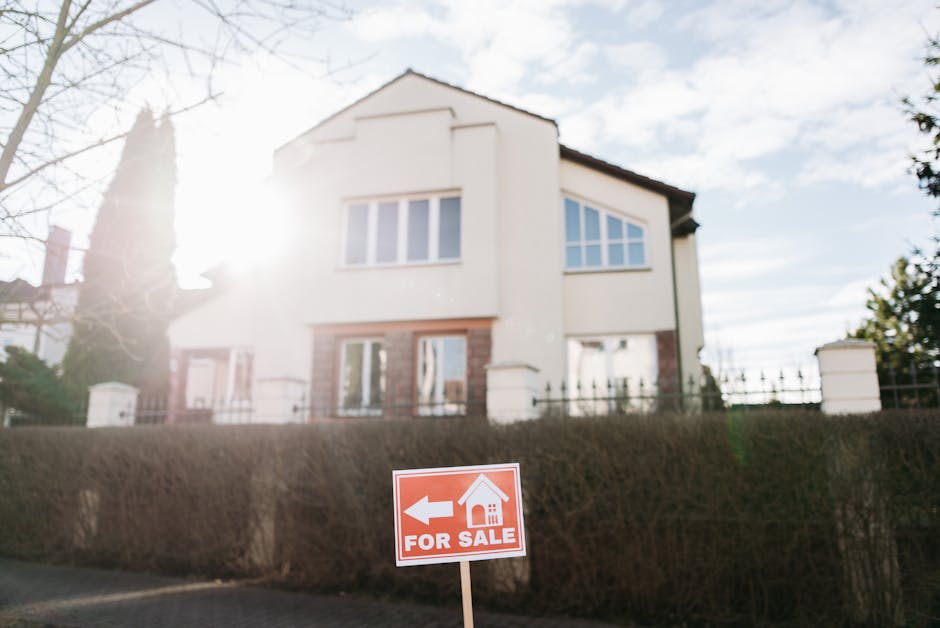
The question of whether to sell a home without a real estate agent — commonly known as For Sale By Owner, or FSBO — is one that many sellers consider, particularly when commission costs are calculated against the sale price. On a $450,000 home, a 6 percent commission is $27,000, which is a meaningful sum. The temptation to capture that amount by selling independently is understandable, and in some cases, a FSBO transaction can be successful. However, the decision should be made with a full understanding of the work an agent performs, the risks of going it alone, and the data on FSBO outcomes. Over my career, I have seen FSBO transactions produce both excellent and disastrous results, and the difference almost always comes down to the seller's preparation, market knowledge, and willingness to invest the time the process demands.
The primary motivation for FSBO is cost savings. By not paying a listing agent commission — typically 2.5 to 3 percent of the sale price — the seller retains that amount as additional proceeds. In a rising market where homes sell quickly with minimal effort, this can appear to be an easy saving. However, the calculation is more complex than it first appears. Many FSBO sellers still offer a commission to the buyer's agent — typically 2.5 to 3 percent — because limiting the buyer pool to unrepresented buyers significantly reduces exposure and can lower the final sale price. When the buyer's agent commission is included, the actual savings from FSBO are the listing-side commission only, not the full 5 to 6 percent.
Data on FSBO outcomes is revealing. According to surveys conducted by the National Association of Realtors, FSBO homes typically sell for less than agent-assisted sales. While the comparison is not perfectly controlled — FSBO homes may skew toward smaller, lower-priced properties or rural locations where agent representation is less common — the consistent finding across multiple years is that the median FSBO sale price is lower than the median agent-assisted sale price. This suggests that the commission savings are at least partially offset by a lower sale price, which can result from suboptimal pricing, limited marketing exposure, weaker negotiation, or a combination of all three.
Pricing is one of the most common points of failure for FSBO sellers. Without access to the MLS and without a professional comparative market analysis, FSBO sellers often rely on online valuation tools, tax assessed values, or the prices of nearby active listings — none of which are reliable indicators of market value. Active listings represent the competition, not the market — a home listed at $500,000 that eventually sells for $465,000 tells you the market value was closer to $465,000. Sold comparables, properly adjusted for differences, are the only reliable basis for pricing, and FSBO sellers typically do not have the tools or training to perform this analysis accurately. The result is often an initial price that is too high, followed by price reductions that signal to buyers that the home is overpriced or that the seller is motivated.
Marketing exposure is the second significant challenge. The MLS is the primary distribution channel for residential real estate listings, and it feeds virtually every major online search platform. FSBO sellers who list on FSBO websites or social media reach a fraction of the buyer pool that an MLS-listed property reaches. Some FSBO sellers pay a flat fee to a brokerage for an MLS entry while retaining the right to handle showings and negotiations independently — a hybrid approach that can improve exposure while reducing commission costs. This option is worth considering for sellers who are confident in their ability to manage the rest of the transaction but want the marketing reach of the MLS.
Legal compliance and disclosure requirements are areas where FSBO sellers face elevated risk. Most states require sellers to provide specific disclosures about the property's condition, known defects, environmental hazards, and other material facts. Failure to provide required disclosures — or providing them incorrectly — can expose the seller to post-closing litigation from the buyer. A licensed real estate agent carries errors and omissions insurance and works under a broker's supervision, which provides a layer of professional accountability. A FSBO seller has no such protection and is personally responsible for every document and disclosure in the transaction. I strongly recommend that any FSBO seller engage a real estate attorney to review the contract, disclosures, and closing documents, even if they are not using an agent for the full transaction.
Negotiation is another area where the absence of professional representation can cost the seller money. A skilled agent serves as a buffer between the seller and the buyer, managing emotional dynamics, evaluating offer terms, and countering strategically. A FSBO seller negotiating directly with a buyer — or with a buyer's agent who negotiates transactions for a living — is at an inherent disadvantage. The buyer's agent knows the market, knows the seller's motivations can be inferred from listing language and showing patterns, and has experience structuring offers and counteroffers. A FSBO seller who accepts the first offer without understanding how its terms compare to what the market might produce may leave significant money on the table.
Qualifying buyers is a practical task that FSBO sellers often underestimate. Every showing should be preceded by verification that the buyer is preapproved for financing in the appropriate price range. Showing a home to an unqualified buyer wastes time, creates unnecessary access to the property, and can produce a false sense of market demand when an offer never materializes. A real estate agent typically coordinates with buyer's agents to ensure that showings are scheduled with preapproved buyers. A FSBO seller must establish this protocol independently, which requires asking direct questions about financing — a conversation some sellers find uncomfortable but is essential for efficiency and safety.
The transaction management process — from contract acceptance through inspection, appraisal, loan contingency removal, and closing — requires careful coordination and deadline management. Missing a contingency deadline can breach the contract and expose the seller to legal claims from the buyer. A real estate agent uses transaction management systems to track deadlines, coordinate with the title company, lender, and attorney, and ensure that each step is completed on time. A FSBO seller must manage this process themselves, which is feasible for someone with the time, knowledge, and organizational skills to do so, but which is a significant burden for a seller who is also working a full-time job or managing a family.
There are situations where FSBO can be a reasonable choice. If the seller has a ready buyer — a family member, a neighbor, or a tenant already in the property — the marketing and showing burden is eliminated, and the transaction becomes primarily a paperwork exercise. If the seller has real estate experience, understands local disclosure requirements, and has the time to manage the process, the risks are reduced. If the property is in a hot market where multiple offers are common and homes sell within days, the pricing and marketing advantages of an agent are less critical. In these specific circumstances, the cost savings of FSBO may justify the additional effort.
Conversely, there are situations where FSBO is unwise. If the property is unusual, difficult to comp, or in a slow market where marketing and pricing expertise are critical, an agent's services are likely worth the commission. If the seller is time-constrained, uncomfortable with negotiation, or unfamiliar with legal requirements, the risk of a costly mistake is high. If the property is high-value, the commission amount is larger in absolute terms, but so is the financial impact of a pricing error or a negotiation misstep — the stakes scale with the price, and the value of professional representation scales with it.
A balanced approach for sellers who want to reduce commission costs while maintaining professional support is to interview multiple agents and negotiate the commission rate. Some agents will accept a reduced commission for a property that is well-located, easy to show, and likely to sell quickly. Others may offer tiered service packages — a lower commission for a more limited service level, with the seller handling showings or marketing. These options provide a middle ground between full-service representation and FSBO, and they are worth exploring before committing to either path.
This article is for educational purposes only and does not constitute legal, tax, or financial advice. Real estate licensing laws, commission practices, and disclosure requirements vary by state. Readers should consult a licensed real estate attorney and a qualified real estate professional for guidance specific to their situation and jurisdiction.

Have Questions About Your Mortgage Options?
Speak with Ebonie Beaco, Senior Mortgage Loan Officer (NMLS #2389954).
For Sale By Owner Property Listings
Sell Your Home By Owner
Visit 4SaleByOwners.net for professional services and resources.
This is a promotional link to an affiliated business of the publisher, separate from the magazine's editorial content.
Editorial Disclosure: This article is published by Mortgage & Real Estate Strategist Magazine for informational and educational purposes. It does not constitute legal, tax, financial, or investment advice. Mortgage and real estate professionals should consult appropriate experts and verify current program guidelines before making decisions based on this content.
Sources & References
- National Association of Realtors — Profile of Home Buyers and Sellers
- Consumer Financial Protection Bureau — Real Estate Transaction Guidance
- Legal Information Institute — State Real Estate Disclosure Requirements
- U.S. Department of Housing and Urban Development — Settlement Cost Information
Sources Last Verified: November 8, 2026
Publisher & Mortgage Strategist
Ebonie Beaco is the founder and publisher of Mortgage & Real Estate Strategist Magazine. She is a licensed mortgage loan officer (NMLS #2389954) affiliated with NEXA Lending (NMLS #1660690), providing lending services in multiple states. She covers mortgage strategy, lending programs, and real estate investing.
Read More Articles by Ebonie Beaco