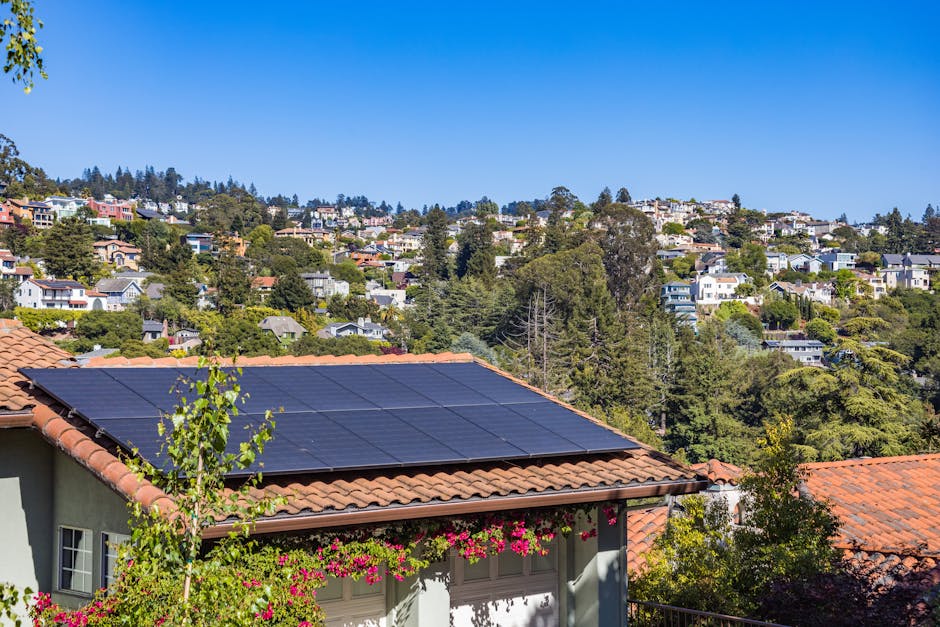
Sustainability in housing has evolved from a niche differentiator marketed to a narrow audience into a mainstream consideration that influences buyer preferences, regulatory requirements, and operating costs. The shift has been driven by a combination of factors: rising energy costs that make efficiency an economic rather than purely environmental decision, building-code updates that raise the baseline for new construction, and a generational change in buyer values. Over my 25-plus years as a mortgage strategist and senior loan officer, I have watched energy efficiency move from a footnote in listing descriptions to a featured selling point, and I have seen the financing products designed to support it multiply. This guide examines the standards, certifications, and retrofit strategies that genuinely affect a home's long-term value and a household's monthly costs, with practical guidance for buyers, owners, and sellers navigating a market where green is increasingly the default.
The building certifications that matter most in residential real estate are LEED, ENERGY STAR, and Passive House, and understanding the differences is essential for evaluating a property's efficiency claims. LEED, administered by the U.S. Green Building Council, is the most widely recognized certification and applies to a range of building types, including single-family homes and multifamily buildings. It scores across multiple categories — energy, water, materials, indoor environmental quality — and awards levels from Certified to Platinum. ENERGY STAR is more focused and, in some ways, more practical for the residential buyer: it certifies that a home has been independently verified to meet specific energy-efficiency standards, typically 15 to 30 percent more efficient than a code-built home. Passive House is the most rigorous standard, focused on creating an ultra-efficient building envelope that minimizes the need for active heating and cooling. For a buyer, the presence of a certification provides third-party validation that the efficiency claims are real and not just marketing language, and that validation has measurable value in markets where buyers are educated about it.
The economic case for energy efficiency is more straightforward than it is often presented. A more efficient home costs less to operate, month after month, for as long as the owner holds the property. The question is whether the upfront cost of efficiency features — whether in new construction or in a retrofit — is recovered through those savings and through resale value. The answer depends on the specific improvements, the local climate, the local energy costs, and the time horizon. Insulation and air-sealing upgrades typically offer the strongest return because they are relatively inexpensive and they reduce the largest energy loads — heating and cooling. High-efficiency HVAC equipment pays back over a longer period but also reduces operating costs meaningfully. Solar panels are the most variable: in sunny regions with high electricity rates and favorable net-metering policies, they can pay back in under a decade; in regions with low rates and limited sun, the payback period may exceed the time the owner expects to hold the home. I encourage clients to treat efficiency investments as a calculation, not a conviction, and to model the payback against their expected ownership horizon.
For owners of existing homes, the retrofit path to efficiency is well established, and the financing options to support it have expanded significantly. The most impactful first step is almost always a professional energy audit, which uses blower-door testing and thermal imaging to identify where a home is losing conditioned air. The audit produces a prioritized list of improvements ranked by cost-effectiveness, and it takes the guesswork out of where to invest. Common high-impact retrofits include attic and wall insulation, air sealing around penetrations and rim joists, duct sealing in forced-air systems, and the replacement of single-pane windows in climates where heating or cooling loads are significant. On the financing side, the Federal Housing Administration offers a 203(k) rehabilitation loan that can wrap the cost of efficiency improvements into a single mortgage, and Fannie Mae offers a HomeStyle Renovation loan with similar flexibility. These products allow a buyer to finance both the purchase and the efficiency work in one payment, which is often more economical than financing the improvements separately after closing.
The relationship between energy efficiency and appraisal value is strengthening but remains inconsistent across markets. The core challenge is the same one that affects smart-home technology: comparable sales data does not consistently capture efficiency features, making it difficult for appraisers to isolate their value contribution. However, a growing body of research and an increasing number of appraisers trained in green valuation are closing this gap. The Appraisal Institute offers a green-designation program, and lenders who work with these appraisers can obtain more accurate valuations of efficient properties. For sellers, the practical implication is to document everything — the certification, the audit results, the utility bills before and after improvements, the specific equipment and its ratings. Documentation does not guarantee an appraisal adjustment, but it provides the appraiser with the evidence needed to support one, and it provides buyers with the confidence to pay for the value they perceive.
Regulatory trends are pushing the efficiency baseline upward, and this has implications for both new and existing housing stock. Building codes in many jurisdictions now require higher insulation values, more efficient HVAC equipment, and electrification-ready infrastructure than they did even five years ago. Some jurisdictions have adopted building performance standards that require existing buildings to meet efficiency benchmarks over time, which affects multifamily and commercial properties most directly but signals a direction that may reach single-family rentals. For buyers, this means that a home built to older codes, while potentially less expensive to purchase, carries a higher operating cost and may face future compliance costs if retrofit mandates expand. For owners, it means that efficiency improvements are not only about immediate savings but about maintaining the property's competitiveness in a market where the baseline is rising. I discuss these dynamics with clients not to alarm them but to ensure that their purchase or improvement decisions account for the direction the market is moving, not just where it sits today.
A practical framework for any homeowner considering efficiency improvements is to prioritize by return, not by visibility. The most visible improvements — solar panels, for instance — are not always the most cost-effective, while the most cost-effective improvements — insulation and air sealing — are invisible once installed. A homeowner who has a limited budget is better served by an attic insulation upgrade and professional air sealing than by a single visible feature that generates conversation but saves less. The exception is when a visible feature aligns with buyer expectations in the local market; in some markets, the absence of solar panels is a competitive disadvantage, and in that case, the marketability benefit compounds the energy benefit. The right approach is always specific to the property, the climate, and the market, and it is worth consulting with both an energy professional and a real estate professional before committing to a significant investment. Over a 25-year career, the clients I have seen most satisfied with efficiency investments are those who approached them as they would any other financial decision — with data, a clear time horizon, and realistic expectations.
This guide is provided for educational purposes only and does not constitute legal, tax, or financial advice. Mortgage lending is subject to credit approval, and programs, rates, and guidelines are subject to change. Efficiency savings and payback periods vary by climate, energy costs, and property specifics. Always verify current program requirements with a qualified professional before making decisions based on this material.

Have Questions About Your Mortgage Options?
Speak with Ebonie Beaco, Senior Mortgage Loan Officer (NMLS #2389954).
Editorial Disclosure: This article is published by Mortgage & Real Estate Strategist Magazine for informational and educational purposes. It does not constitute legal, tax, financial, or investment advice. Mortgage and real estate professionals should consult appropriate experts and verify current program guidelines before making decisions based on this content.
Sources & References
Sources Last Verified: November 8, 2026
Publisher & Mortgage Strategist
Ebonie Beaco is the founder and publisher of Mortgage & Real Estate Strategist Magazine. She is a licensed mortgage loan officer (NMLS #2389954) affiliated with NEXA Lending (NMLS #1660690), providing lending services in multiple states. She covers mortgage strategy, lending programs, and real estate investing.
Read More Articles by Ebonie Beaco