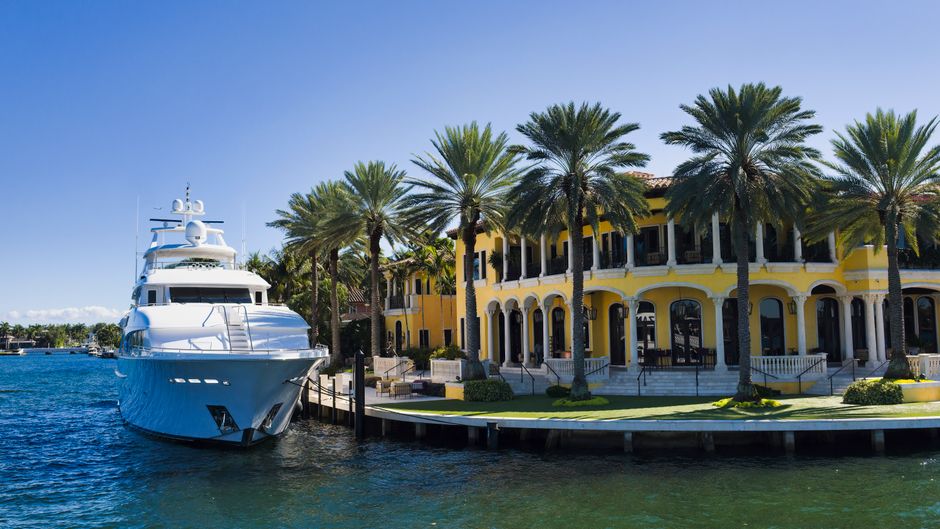
Waterfront property is among the most desirable and most complex categories of luxury real estate. A home on the water — whether oceanfront, lakefront, riverfront, or bayfront — offers a lifestyle that inland properties cannot match. But that lifestyle comes with a set of financial, insurance, maintenance, and regulatory considerations that are fundamentally different from those of a conventional home. In my 25 years of mortgage lending and real estate strategy, I have helped many clients finance waterfront properties, and the buyers who approach the process with a clear understanding of these considerations are the ones who enjoy their waterfront investment without unpleasant financial surprises.
The first and most critical consideration for any waterfront property is flood risk and flood insurance. Waterfront properties are frequently located in Special Flood Hazard Areas — zones designated by the Federal Emergency Management Agency (FEMA) as having elevated flood risk. If a property is in a high-risk flood zone (designated as Zone A or Zone V on FEMA flood maps) and the mortgage is federally related — meaning it is originated by a federally regulated lender or sold to Fannie Mae, Freddie Mac, FHA, or VA — flood insurance is mandatory. The requirement is not optional, and the lender will require evidence of coverage before closing and will escrow for the premium along with property taxes and homeowners insurance.
Flood insurance coverage limits under the National Flood Insurance Program (NFIP) are capped at $250,000 for residential building coverage and $100,000 for contents — limits that are woefully inadequate for most luxury waterfront homes. A $2 million oceanfront property cannot be fully insured through the NFIP alone. For properties where the NFIP limits are insufficient, private flood insurance and excess flood insurance policies are available, and they are an essential part of the risk management strategy for luxury waterfront owners. A private or excess flood policy can provide coverage up to the full replacement cost of the structure, and in some cases, coverage for additional living expenses, pool and deck repair, and other structures that the NFIP may exclude or limit. The cost of this coverage varies widely based on the property’s elevation, construction type, proximity to the water, and the coverage limits selected — but it is a non-negotiable cost of waterfront ownership.
Windstorm insurance is a separate and equally important consideration for coastal properties. In many coastal states, standard homeowners insurance does not cover wind damage from named storms — hurricanes, tropical storms — and a separate windstorm policy or a wind endorsement is required. In some regions, windstorm coverage is provided through state-run insurance pools (such as the Citizens Property Insurance Corporation in Florida or the Texas Windstorm Insurance Association), while in others, it is available through the private market. Windstorm deductibles are typically percentage-based rather than dollar-based — commonly 2 to 5 percent of the dwelling coverage limit. On a home insured for $1.5 million, a 5 percent windstorm deductible means the owner is responsible for the first $75,000 of wind damage before insurance pays anything. Understanding the deductible structure is essential, because a percentage deductible on a high-value home can represent a very large out-of-pocket exposure.
The total insurance cost for a waterfront property can be staggering compared to an inland home. A luxury inland home might have an annual homeowners insurance premium of $3,000 to $6,000. A comparable waterfront property might have a homeowners premium of $5,000 to $10,000, plus a flood premium of $3,000 to $15,000 (or more, if private excess coverage is needed), plus a windstorm premium of $5,000 to $20,000. The combined annual insurance cost can easily reach $15,000 to $45,000 or more, depending on the property and location. This cost must be factored into the total monthly housing payment — and if the property is financed, the lender will escrow for all three policies, which can add $1,200 to $3,750 or more to the monthly escrow payment. I have seen buyers who were prepared for the mortgage payment but unprepared for the insurance escrow, which pushed their total monthly housing cost above their comfort threshold.
Financing a waterfront property involves the same jumbo or conventional qualification standards as any other property, but with additional scrutiny of the property itself. Lenders will review the flood zone determination carefully and will require flood insurance in the appropriate amount before issuing a clear-to-close. If the property is in a Coastal Barrier Resources System (CBRS) zone — a designated area where federal financial assistance for development is prohibited — conventional, FHA, and VA financing may not be available at all, and the buyer may need to seek portfolio or private financing. The lender will also evaluate the property’s insurability: if insurance coverage cannot be obtained at a reasonable cost, or if the only available coverage is from a state insurer of last resort with limited protection, the lender may decline the loan.
Erosion and sea-level rise are factors that affect both the long-term value and the insurability of waterfront property. Some coastal areas are experiencing measurable shoreline retreat, and properties that were once safely set back from the water may now be perilously close. FEMA flood maps are updated periodically, and a property that is currently in a moderate-risk zone may be remapped into a high-risk zone, triggering new insurance requirements and costs. Buyers should research the historical erosion rate for the specific stretch of coastline, ask about any government-sponsored beach nourishment or shoreline protection programs, and consider whether the property has structural protections such as seawalls, revetments, or elevated construction. An elevated home — built on pilings or raised above the Base Flood Elevation — may qualify for significantly lower flood insurance premiums and may be more resilient to storm surge.
Docks, seawalls, and other waterfront structures add both value and complexity. A private dock with deep-water access can add significant value to a waterfront property, particularly for properties on navigable waterways. However, docks are subject to permitting requirements from multiple agencies — the Army Corps of Engineers, state environmental agencies, and local authorities — and existing docks may be grandfathered under older permits that may not be replicable if the dock is destroyed. A buyer should verify that any existing dock, seawall, or waterfront structure is properly permitted, in good condition, and compliant with current regulations. The cost of repairing or replacing a seawall can be substantial — $50,000 to $200,000 or more, depending on the length and construction — and this is a maintenance cost that inland homeowners never face.
Water quality and water access are practical considerations that affect the lifestyle value of a waterfront property. On a lake, water levels may fluctuate seasonally, and a dock that is functional in summer may be high and dry in winter. On a river, flow rates and currents can affect swimming, boating, and dock usability. On the ocean or a bay, tidal patterns determine when the water is deep enough for a boat at the dock. A property with a dock in water that is too shallow for the owner’s boat at low tide is a disappointment that may not be obvious during a midday property tour. Buyers should visit the property at different times of day and in different seasons, and should ask about water depth at the dock, seasonal variation, and any restrictions on dock use or boat size.
Due diligence for a waterfront purchase should include, at minimum: a flood zone determination and elevation certificate; a review of historical flood and storm damage to the property; an insurance quote for homeowners, flood, and windstorm coverage; a shoreline or erosion assessment; an inspection of any docks, seawalls, bulkheads, or other waterfront structures; a review of permits for existing waterfront improvements; and an understanding of any homeowners association or community rules that govern waterfront use. A waterfront-specialist real estate agent and a local insurance agent who understands coastal coverage are essential members of the buyer’s team. I also recommend that buyers interview the local building department to understand any restrictions on construction, renovation, or shoreline modification that could affect future plans.
From a financing strategy perspective, waterfront buyers should get pre-approved with a lender who has experience with waterfront and jumbo properties. The lender should be able to provide clear guidance on flood insurance requirements, escrow calculations, and any property-specific issues that could affect loan approval. I have worked with buyers who started with a lender unfamiliar with waterfront complexity, only to encounter delays and conditions late in the process that a more experienced lender would have flagged at the beginning. Switching lenders mid-transaction is stressful and can jeopardize a closing timeline, so choosing the right lender from the outset is particularly important for waterfront purchases.
This guide is for educational purposes only and does not constitute insurance advice, a loan offer, or financial guidance. Flood zones, insurance requirements, and waterfront regulations vary by location and are subject to change. Readers should consult a licensed insurance professional, a qualified real estate attorney, and a licensed mortgage loan officer for guidance specific to their property and circumstances.

Have Questions About Your Mortgage Options?
Speak with Ebonie Beaco, Senior Mortgage Loan Officer (NMLS #2389954).
Editorial Disclosure: This article is published by Mortgage & Real Estate Strategist Magazine for informational and educational purposes. It does not constitute legal, tax, financial, or investment advice. Mortgage and real estate professionals should consult appropriate experts and verify current program guidelines before making decisions based on this content.
Sources & References
- Federal Emergency Management Agency (FEMA) — Flood Insurance Rate Maps and NFIP Guidelines
- National Flood Insurance Program (NFIP) — Coverage Limits and Requirements
- U.S. Army Corps of Engineers — Permitting Requirements for Waterfront Structures
- Insurance Information Institute — Coastal Property Insurance Guide
Sources Last Verified: November 8, 2026
Publisher & Mortgage Strategist
Ebonie Beaco is the founder and publisher of Mortgage & Real Estate Strategist Magazine. She is a licensed mortgage loan officer (NMLS #2389954) affiliated with NEXA Lending (NMLS #1660690), providing lending services in multiple states. She covers mortgage strategy, lending programs, and real estate investing.
Read More Articles by Ebonie Beaco