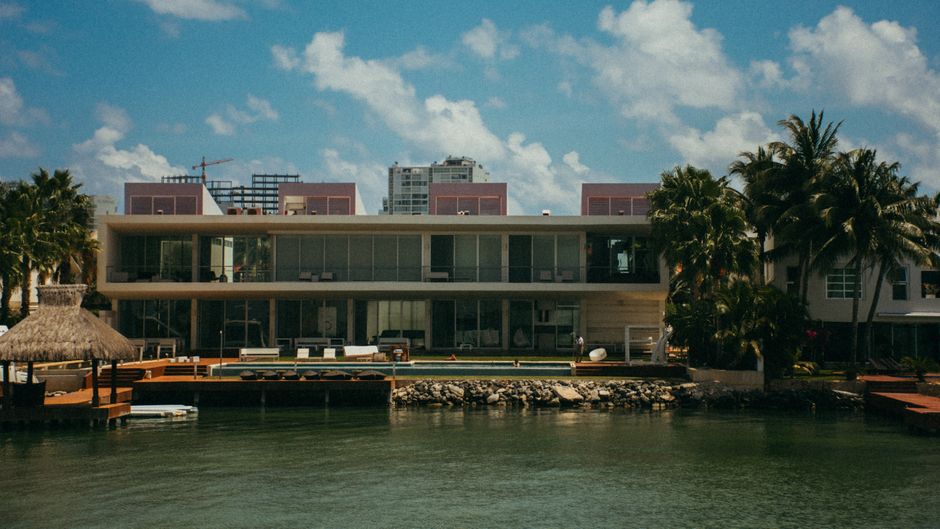
Valuing a luxury property is a fundamentally different exercise from valuing a conventional home. In the mainstream market, value is primarily a function of comparable sales — what similar homes in the same area have recently sold for — adjusted for differences in size, condition, age, and lot. In the luxury market, comparables are scarce, properties are unique, and value is driven by a broader and more subjective set of factors: location and scarcity, land and site characteristics, architectural pedigree, the quality and customization of construction, amenities, views, water frontage, historical significance, and the cost of reproducing the property. Over my 25-plus years in mortgage lending and real estate strategy, I have reviewed hundreds of luxury appraisals and have helped clients understand what drives the value of the properties they are buying or selling, and the goal of this guide is to share that understanding.
Location is the foundational value driver in all real estate, but in the luxury market, the concept of location is more nuanced. It is not just the city or the neighborhood — it is the specific position within that area. An oceanfront lot with 200 feet of private beach is worth dramatically more than a lot three rows back with a partial ocean view. A property on a quiet cul-de-sac within a gated community may be worth more than one on the main entrance road. A penthouse unit on the top floor with unobstructed views is worth more than a mid-floor unit with a similar layout. Within luxury markets, micro-location — the specific position of the property within its setting — can account for price differences of 30 to 50 percent or more for otherwise similar properties. This is why two seemingly comparable estates in the same community can have very different values.
Scarcity is closely related to location and is one of the most powerful value drivers in luxury real estate. A property that cannot be replicated — because the land is not available, because the zoning will not permit it, because the waterfront is fully built out, or because the architectural and historical significance is unique — commands a premium that is not tied to replacement cost. There are only so many oceanfront lots in a given community, only so many estates on a particular golf course, only so many penthouses in a specific building. When supply is fixed and demand exists, value is supported regardless of broader market conditions. This is why prime luxury properties in scarce locations tend to hold their value through market cycles better than luxury properties in areas where new inventory can be added.
Land and site characteristics are particularly important in luxury valuation. The lot size, topography, privacy, and usability of the land all affect value. A 5-acre flat, usable lot with mature landscaping and privacy from neighbors is worth more than a 5-acre steep, rocky lot with limited usable area. Water frontage — the linear feet of water access — is a specific and powerful value driver for waterfront properties. A property with 300 feet of waterfront is worth more than one with 100 feet, and a property on deep water (suitable for large boats) is worth more than one on shallow water. Views — ocean, mountain, city skyline, golf course — are value drivers that are difficult to quantify but that buyers consistently pay for. A property with a protected view (protected by zoning, topography, or conservation easement) is worth more than one whose view could be obstructed by future construction.
Architectural pedigree — the reputation and significance of the architect who designed the property — is a value driver that is unique to the luxury market. A home designed by a renowned architect (such as a Pritzker Prize winner, a significant regional architect, or a designer with a recognized body of work) carries a premium that is analogous to the premium a painting by a recognized artist carries over one by an unknown hand. Architecturally significant properties are valued not just for their utility as residences but for their cultural and aesthetic importance, and they tend to appreciate differently from non-pedigree luxury properties. Buyers who value architectural pedigree are a specific segment of the luxury market, and marketing a pedigreed property requires an approach that highlights the architectural significance.
The quality and customization of construction is a major value driver that is sometimes underappreciated. Luxury properties are not all built to the same standard. The quality of materials (stone, wood, metal, glass), the quality of finishes (millwork, flooring, cabinetry, hardware), the quality of systems (HVAC, smart home, security, audiovisual), and the quality of craftsmanship (the skill of the tradespeople who executed the design) all affect value. A property built with imported stone, custom millwork, and commercial-grade systems is worth more than one of similar size built with standard luxury-grade materials. The cost of reproducing these features — the replacement cost — is a relevant factor in valuation, because a buyer who wants a property with these features would have to build them at current construction costs, which may be substantially higher than the cost at the time the property was built.
Amenities and lifestyle features drive value in the luxury market. A property with a pool, spa, outdoor kitchen, wine cellar, home theater, gym, guesthouse, and multiple-car garage is worth more than one without these features — but the value added by each amenity is not linear. The first pool adds significant value; the second (an indoor pool, for example) adds less. The value of amenities is also market-dependent: a pool is more valuable in a warm-climate market than in a cold-climate one. An equestrian facility adds value in a market with equestrian demand and little in a market without it. Appraisers and pricing strategists evaluate amenities in the context of what the local luxury buyer pool values, not in isolation.
The cost approach to valuation — estimating the land value plus the replacement cost of the improvements, less depreciation — is particularly relevant for luxury properties, especially custom-built estates. The replacement cost of a custom luxury home includes the cost of the lot, the cost of construction at current rates (which may be $400 to $800 or more per square foot for high-end custom construction, depending on the market and the level of finish), the cost of specialized features (pools, wine cellars, smart home systems), and the cost of site work (landscaping, driveways, walls, gates). For a 6,000 square foot custom luxury home at $600 per square foot, the replacement cost of the structure alone is $3.6 million, plus the land value and site work. The cost approach provides a floor for valuation — a buyer is unlikely to pay more for an existing property than it would cost to build an equivalent one from scratch — though scarcity, location, and other factors can push value above replacement cost.
Market conditions affect luxury valuation, but the effect is often slower and less dramatic than in the conventional market. Luxury properties tend to be less liquid — they take longer to sell, and the transaction volume is lower — which means that price adjustments in response to market shifts occur over a longer timeline. In a declining market, luxury sellers may hold their properties off the market rather than sell at a reduced price, which reduces transaction volume but may stabilize prices. In a rising market, the scarcity of prime luxury inventory can drive prices up quickly when demand increases. The relationship between luxury prices and broader economic conditions is mediated by the wealth and confidence of the luxury buyer pool, as discussed in our guide to the luxury housing market.
For buyers, the practical implication of understanding value drivers is that the listed price of a luxury property is a starting point for negotiation, not a definitive statement of value. A buyer should evaluate the property against the key value drivers — location, scarcity, land, construction quality, amenities, and comparables — and form an independent opinion of value. A buyer’s agent with luxury experience can provide a comparative market analysis, and an independent appraisal (if the property is being financed, the lender will require one) provides a professional valuation. If the buyer’s assessment of value differs from the list price, that difference is the basis for negotiation. In the luxury market, where properties are unique and pricing is less mechanistic, there is often more room for negotiation than in the conventional market — but only if the buyer has done the analysis to support their position.
For sellers, understanding value drivers means pricing the property based on what the qualified buyer pool will pay — not on what the seller has invested, not on what the neighbor’s property listed for, and not on what the seller needs to net. The market does not care about the seller’s cost basis; it cares about the property’s value relative to alternatives. A property priced above its market value will sit, and the carrying costs — mortgage, taxes, insurance, maintenance — accumulate during the marketing period, eroding the seller’s net proceeds. A property priced at or slightly above its market value will attract serious interest and may sell quickly at a price close to the list price, preserving the seller’s equity. The discipline of pricing to the market, rather than to the aspiration, is the single most important decision a luxury seller makes.
This guide is for educational purposes only and does not constitute an appraisal, a determination of value, or financial, tax, or legal advice. Luxury property valuation is complex and depends on property-specific and market-specific factors. Readers should consult a licensed appraiser, a real estate professional with luxury market experience, and a licensed mortgage loan officer for guidance specific to their property and circumstances.

Have Questions About Your Mortgage Options?
Speak with Ebonie Beaco, Senior Mortgage Loan Officer (NMLS #2389954).
Mortgage Financing & Mortgage Education
Explore Mortgage Financing Options
Visit MortgageStrategist.net for professional services and resources.
This is a promotional link to an affiliated business of the publisher, separate from the magazine's editorial content.
Editorial Disclosure: This article is published by Mortgage & Real Estate Strategist Magazine for informational and educational purposes. It does not constitute legal, tax, financial, or investment advice. Mortgage and real estate professionals should consult appropriate experts and verify current program guidelines before making decisions based on this content.
Sources & References
- Appraisal Institute — Residential Appraisal Methods and Luxury Property Valuation Standards
- Institute for Luxury Home Marketing — Valuation Methodology for Luxury Properties
- National Association of Realtors — Luxury Market Valuation and Pricing Resources
Sources Last Verified: November 8, 2026
Publisher & Mortgage Strategist
Ebonie Beaco is the founder and publisher of Mortgage & Real Estate Strategist Magazine. She is a licensed mortgage loan officer (NMLS #2389954) affiliated with NEXA Lending (NMLS #1660690), providing lending services in multiple states. She covers mortgage strategy, lending programs, and real estate investing.
Read More Articles by Ebonie Beaco